
Restoring Dignity: Dr. Melissa Fischer’s Life-Changing Mission to Angola
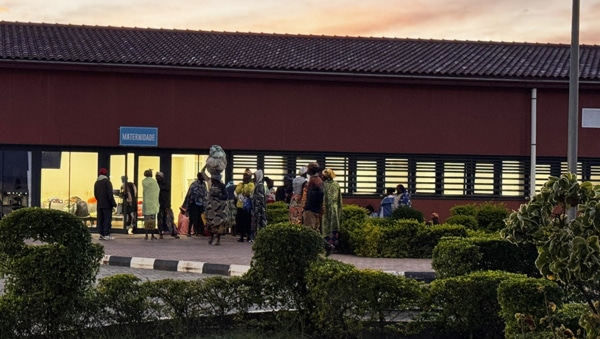
Imagine giving birth without medical help, enduring days of prolonged labor, and surviving—only to be left with a debilitating condition that causes constant incontinence. For many women in Angola, this is a harsh reality. Because of the stigma surrounding the condition, these women are often shunned by their families and communities, left to suffer in silence.
This past spring, Dr. Melissa Fischer of the Michigan Institute of Urology flew 7,000 miles to Angola, located on the west coast of Africa, to change that. Sponsored by the Corewell Urology Foundation, her mission was simple yet profound: give these women their lives back.
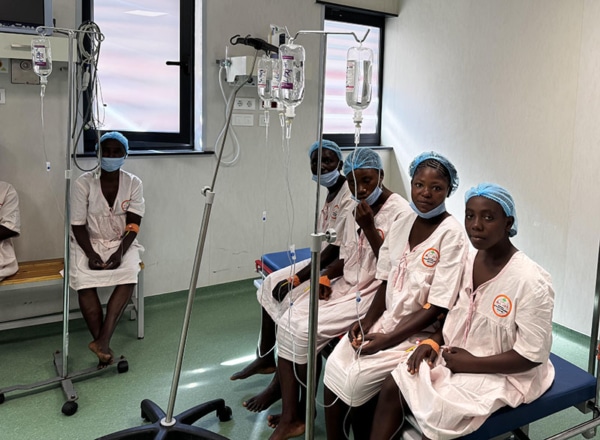
The women in Angola are hopeful as they arrive and await surgery at William Strangway Hospital in Kuito to correct their fistula.
The Reality of Obstetric Fistula
In Angola, where nearly 78% of the population lives in poverty, access to maternal healthcare is severely limited. Without professional medical intervention during obstructed labor, tissue damage can create an obstetric fistula—an injury that leads to urinary and fecal incontinence.
The physical toll is devastating, but the social isolation is often worse. This once-a-year humanitarian effort, known as “Fistula Camp,” is a lifeline.
12-Hour Days and Resourceful Teams
The mission was intense, requiring long hours and seamless teamwork. Alongside a urogynecology fellow nearing the end of her training at Corewell Royal Oak, Dr. Fischer jumped straight into a demanding surgical schedule.
“We operated 12 hours a day in a facility that was up-to-date and well organized,” says Dr. Fischer. “The cases were challenging, but the staff and operating room crew were supportive and welcoming. It was a privilege to work alongside fellow surgeons from two hospitals in Africa who joined us.”
Despite the language barrier, the team bonded instantly over their shared purpose.
“They speak Portuguese, so we quickly learned how to communicate with them,” Dr. Fischer recalled, praising the local medical team as “remarkably resourceful.”
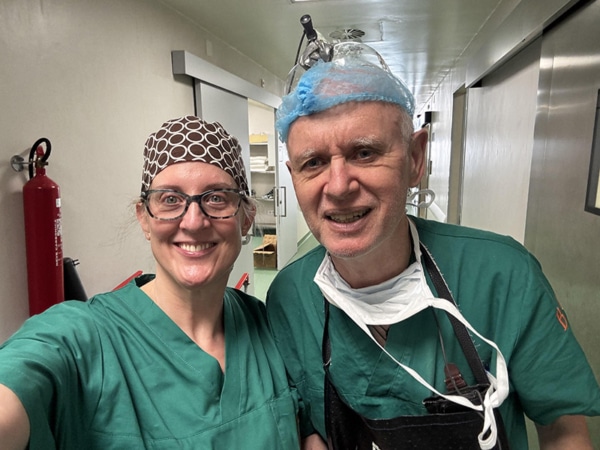
Dr. Melissa Fischer and Dr. Michael Breen from Madagascar take a quick break during their 12-hour days.
A Journey of Hope
For the patients, the road to healing began long before they reached the operating table. A dedicated outreach team spends months traveling to remote, rural villages to locate these women and arrange their transport to the specialty hospital.
“These women suffer a long time waiting to receive our care,” explains Dr. Fischer. “They are often from small villages… When they arrived, the women were so hopeful and appreciative of the surgery to correct their fistula.”
A Two-Way Street of Learning
While the surgeries completely transform the lives of the patients, Dr. Fischer emphasizes that the medical team returns home deeply changed as well.
“While these trips take time away from my regular job and family, the collaborative environment allows us to provide critical care to young women in need, and I also learn a tremendous amount that I am able to then incorporate into my current practice.”
What Do You Think?
The work being done by the Corewell Urology Foundation and physicians like Dr. Fischer is a powerful reminder of how healthcare can heal communities and restore human dignity.
For anyone who would like to support the ongoing work being done in Angola, tax deductible donations to the Corewell Urology Fund are always appreciated.
Share This Post